

Insights
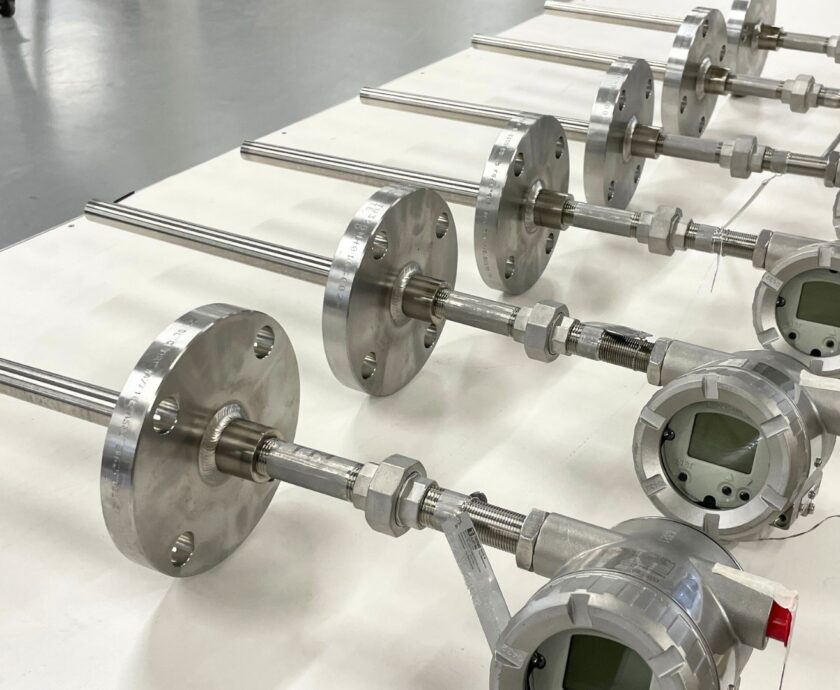
Monitoring the tube metal temperature in fired heaters and furnaces is critical for ensuring both process safety and long-term equipment reliability. Which is why we manufacture specialized Tube skin thermocouples designed for this purpose, capable of operating in high-temperature, high-radiation environments where direct contact measurement is essential to detect hot spots and prevent tube rupture.
Why Tube Metal Temperature Is Critical
At extreme temperatures, metallic tubes undergo thermal stress and creep deformation that can lead to rupture. These effects intensify when local overheating occurs. Continuous surface temperature measurement allows operators to verify that tubes remain within their design limits, avoiding the progressive material weakening that precedes failure.
The primary mechanisms of tube degradation are:
- Thermal stress: from uneven heat distribution.
- Creep: time-dependent plastic deformation under high temperature and pressure.
- Oxidation and corrosion: accelerated by over-temperature exposure.
Accurate monitoring of the outer surface metal temperature ensures fired heaters remain within the safe operating range and helps maintain overall process efficiency.
Understanding Heat Distribution in Fired Heaters
Fired heaters exhibit non-uniform heat distribution. The radiant section receives intense flame radiation, while convection sections rely on flue gas heat transfer. Uneven burner performance, poor flame alignment, or internal coking on tube walls can create local hot spots, forcing tube metal temperature beyond safe limits.
Detecting these variations requires sensors capable of following the true tube skin temperature rather than the surrounding gas temperature. Proper thermal coupling and shielding ensure the reading reflects actual metal conditions, not flame radiation effects.
Sensor Technologies for Tube Monitoring
Skin-Type Thermocouples
Thermo Electric’s Skin Type Thermocouples (Series A510-1) are purpose-built for direct tube surface measurement.
Each assembly consists of a mineral-insulated thermocouple bonded to the tube by a stainless-steel or Inconel contact pad. The hot junction is positioned at the tube surface to provide true metal temperature readings.
Key specifications (Series A510-1):
- Thermocouple type: Chromel-Alumel (Type K) or Iron-Constantan (Type J).
- Sheath material: Inconel 600 or stainless steel.
- Insulation: Compacted MgO, 99.6 % purity, ensuring electrical insulation and thermal conductivity.
- Accuracy: ASTM E230 / IEC 60584 Class 2.
- Hot junction: Insulated for electrical isolation from the sheath.
- Mounting: Weld-on pad or clamping band to achieve secure, high-conductivity contact with the tube surface.
- Operating temperature: Suitable for high-temperature furnace environments where process tube surfaces exceed 800 °C.
These sensors are specifically designed for tube skin applications, offering both mechanical protection and accurate surface coupling.
Infrared and Thermal Mapping Methods
While the primary measurement method remains contact thermocouples, non-contact techniques such as infrared pyrometry or thermal imaging can be used to supplement mechanical sensors for overview monitoring of the heater’s radiant zone. However, only direct skin thermocouples provide reliable calibration traceability and continuous high-accuracy data suitable for control and safety interlocks.
Installation for Accuracy
Accurate tube-metal temperature measurement depends on correct sensor placement and mounting.
Installation considerations include:
- Location: Mount the thermocouple at the expected hottest tube zone, usually mid-height in the radiant section.
- Attachment: Ensure full surface contact between the sensing pad and tube; avoid air gaps that cause lag or offset.
- Shielding: Use radiation shields or reflective covers to minimize influence from direct burner flames.
- Lead routing: Mineral-insulated leads (Inconel-sheathed) resist mechanical vibration and thermal degradation.
- Calibration: All assemblies conform to ASTM E230 / IEC 60584 standards, ensuring traceable accuracy.
Integrating Data for Predictive Maintenance
When multiple skin thermocouples are distributed across a heater, their data can be integrated to form a thermal profile of the furnace tubes.
Monitoring systems analyze these readings to:
- Detect progressive temperature rise that signals coke buildup.
- Compare tube-to-tube temperature deviations to identify burner imbalance.
- Predict remaining tube life based on creep rate models.
- Schedule decoking or maintenance shutdowns before unsafe temperatures occur.
This predictive approach reduces unscheduled downtime, improves energy efficiency, and safeguards personnel and equipment.
Wrapping Up
Maintaining accurate tube metal temperature measurement is central to fired heater safety, hot spot detection, and tube rupture prevention.
Our skin-type, mineral-insulated thermocouple assemblies provide precise, durable monitoring directly at the tube surface, enabling engineers to keep every heater within its safe thermal envelope and extend its operational life.